Voice AI Development
Voice consultations and call routing that transcribe, understand, and act.
We build voice AI systems for real-time conversations, not IVR menus, but voice interfaces that route calls, transcribe live, and turn spoken interaction into structured, actionable data. Our flagship implementation is MediConsult's AI-powered voice consultation layer: VAPI handles call routing and voice orchestration, Deepgram provides real-time speech-to-text during live calls, and natural-language commands drive scheduling actions directly from conversation. We also build voice synthesis (text-to-speech and AI dubbing) for content workflows, as in Caption CC's dubbing pipeline. This is a newer part of our practice, currently proven on one flagship healthcare deployment and one media/dubbing pipeline. Evaluate scope with us directly for your use case.
Who this is suitable for
- Businesses that handle real-time voice interactions (consultations, bookings, support calls) that currently require manual routing or note-taking
- Teams that need spoken content transcribed and turned into structured, searchable records
- Content or media workflows that need natural-sounding voice synthesis or dubbing, not just robotic TTS
Business problems this addresses
- Calls that require manual routing to the right person, with no automated triage
- No transcript or structured record of what was actually said in a consultation or call
- Scheduling and follow-up actions that require someone to listen back and manually enter data
What we actually deliver
- Voice call routing and orchestration configured for your workflow
- Real-time speech-to-text transcription during live calls
- Natural-language command handling for actions like scheduling directly from conversation
- Where relevant: text-to-speech / AI dubbing output for content workflows
What's outside the standard scope
- Full IVR phone-tree replacement with no AI component: that's traditional telephony, not what we build
- Voice biometrics or speaker-identification security systems
- Multi-language real-time interpretation beyond what the underlying STT/TTS providers (Deepgram, ElevenLabs) support
Technical capabilities
- Voice call routing and orchestration via VAPI
- Real-time speech-to-text via Deepgram, with live transcription during active calls
- Natural-language-to-action handling: converting spoken commands into scheduling and workflow actions
- Text-to-speech / AI dubbing via ElevenLabs, including multi-segment audio assembly with FFmpeg
Integrations and technologies
Delivery process
Every engagement follows the same fixed-scope process: Scope → Build → Launch → Grow. A 20-minute call and a 2-page proposal define fixed scope and price, weekly Friday demos show real progress, and launch means deployed, tested, documented, and handed over.
What affects the timeline
- Whether call routing logic needs to integrate with an existing phone/telephony provider
- Number of scheduling or downstream actions the voice layer needs to trigger
- Whether live transcription needs to feed a real-time UI (as in MediConsult) or can process asynchronously
What affects pricing
- Scope, integrations, AI complexity, and deployment requirements set the final quote
- Voice AI typically carries higher integration complexity (telephony, real-time streaming) than the Launch Sprint tier covers, so most voice work fits a Core MVP engagement (45 days) or larger
- Fixed price after a 20-minute scoping call; 50% advance to begin
Security, privacy, and human review
- Human Review Checkpoints: automated scheduling actions triggered by voice commands should have a confirmation step for anything consequential
- Data Privacy: call transcripts and voice data are scoped and access-controlled
- Fallback Flows: if real-time transcription or routing fails, the system should degrade to a manual path rather than dropping the call silently
See the full list of engineering practices on Built for Production.
Relevant case studies
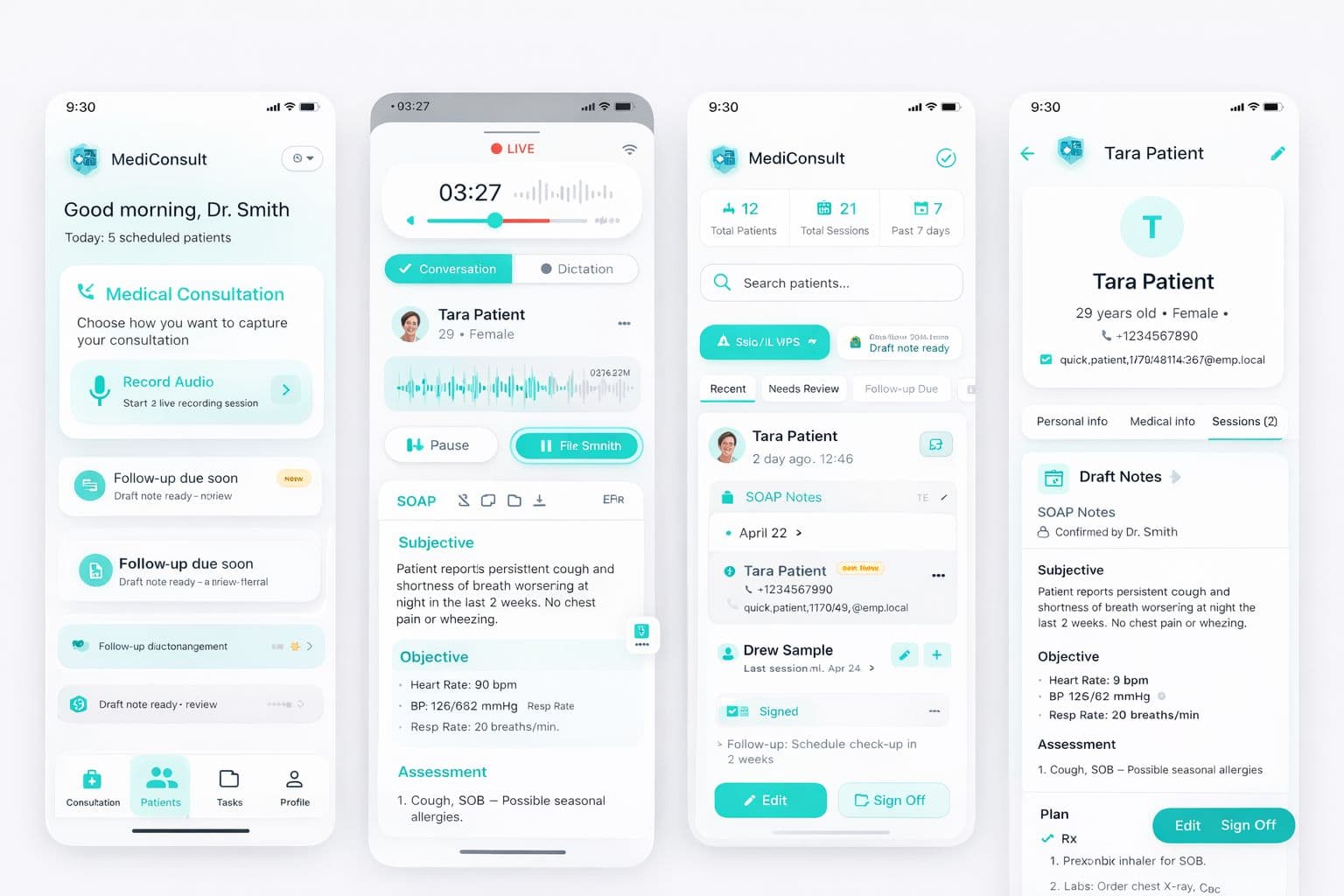
MediConsult
Healthcare operations platform for patients and doctors, combining consultation, scheduling, documents, prescriptions, and communication workflows.
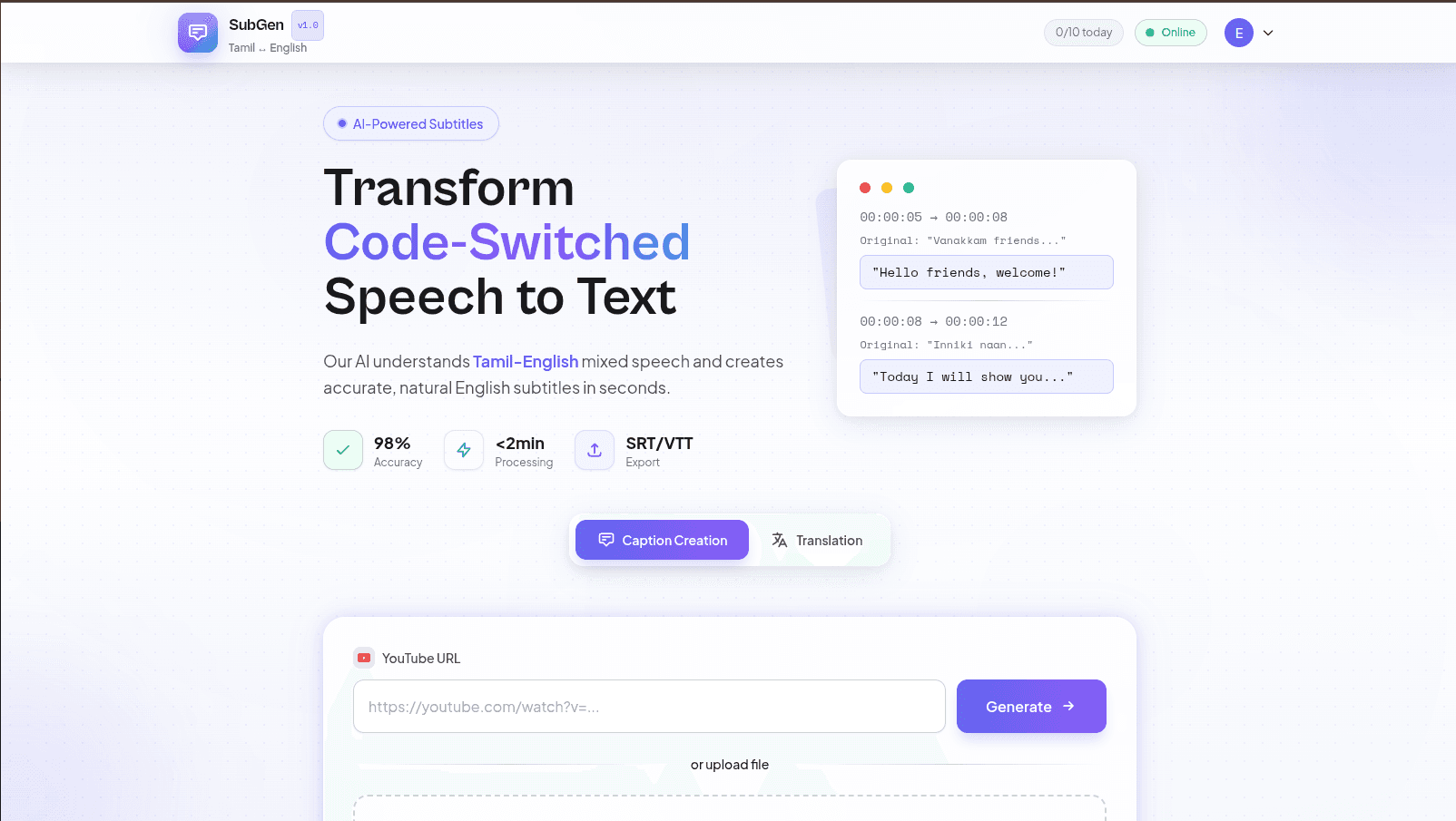
Caption CC
AI media workflow that converts Tamil-English code-switched videos into English subtitles and optional dubbed video output.
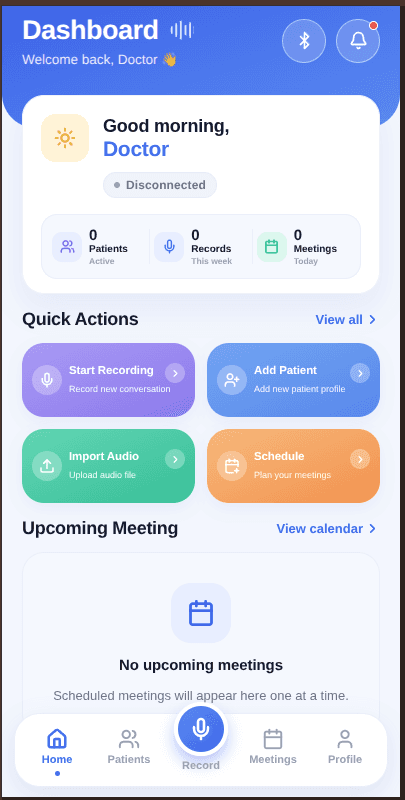
MediScribe
Clinical scribe system that captures patient consultations and converts them into structured draft clinical notes for doctor review.
Common questions
Is this an IVR / phone-tree system?
No. We build AI-driven voice routing and transcription: the call is answered and understood by an AI layer that routes it and can act on spoken instructions, rather than a fixed press-1-for-sales menu.
What's your experience with voice AI specifically?
Honestly: it's currently proven on one flagship deployment (MediConsult, a healthcare platform using VAPI for call routing and Deepgram for real-time transcription) plus a separate text-to-speech/dubbing pipeline in Caption CC. We're confident in the architecture; talk to us directly about how it maps to your specific use case.
Can the voice layer trigger real actions, like booking an appointment?
Yes. MediConsult uses natural-language commands during a call to drive scheduling actions. Any action with real consequences should include a confirmation step, which we scope in during planning.
Do you build voice synthesis / AI dubbing too?
Yes, separately from live call handling. Caption CC uses ElevenLabs for multi-language text-to-speech and dubbing, assembled with FFmpeg into final video output.
Talk through your voice ai development scope
Book a 20-minute AI audit call, or explore the surrounding context first.
Book an AI audit