RAG Development
Retrieval systems that ground AI answers in your own documents and data.
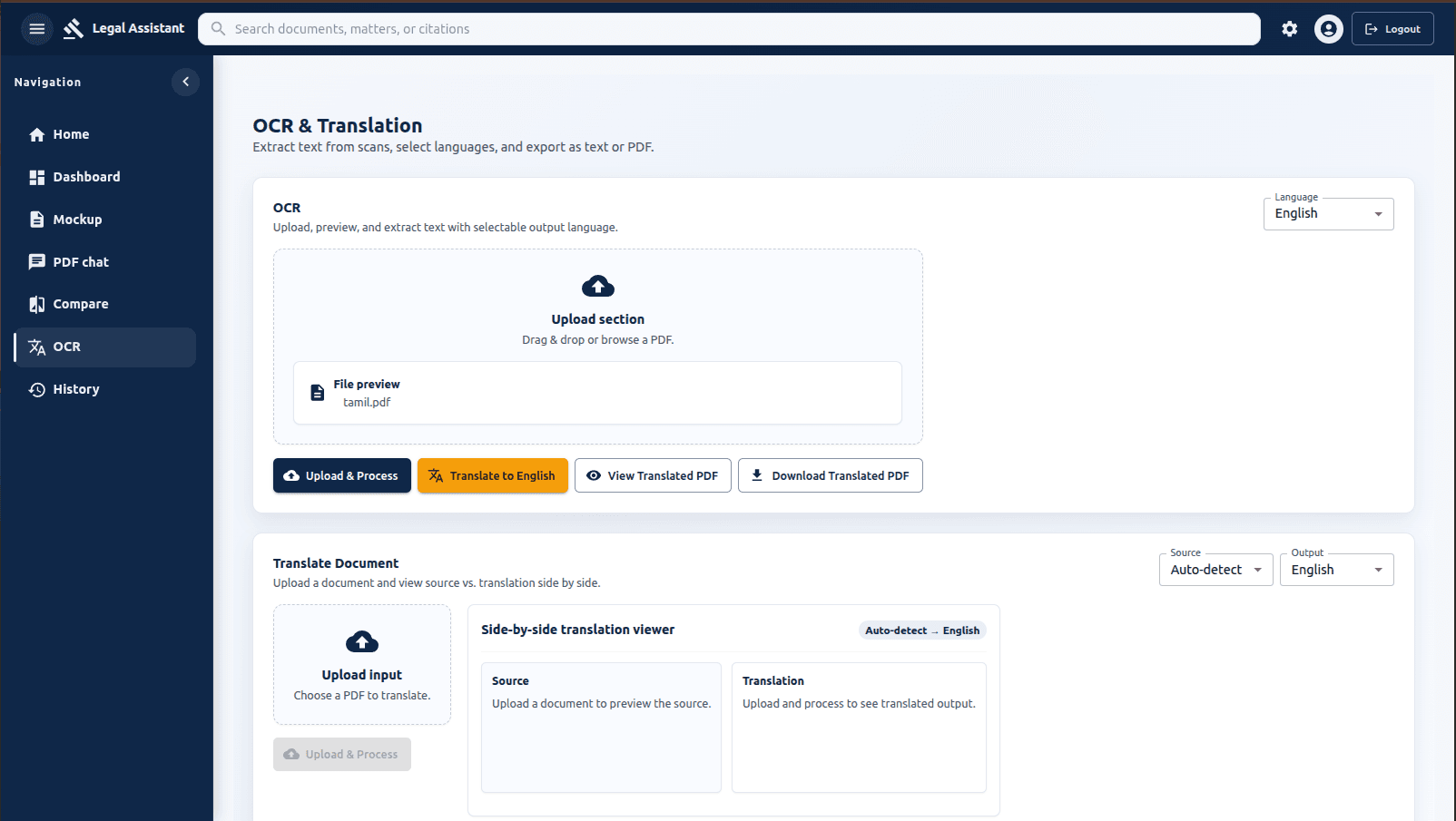
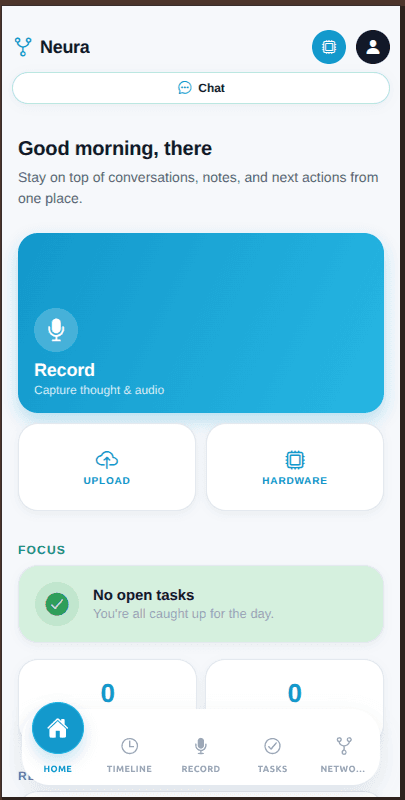
We build retrieval-grounded AI systems: platforms where an LLM's answers are backed by search over your actual documents, case records, or captured knowledge, instead of relying on the model's general training alone. Our Legal Assistant platform retrieves relevant case law from the Indian Kanoon database and grounds document analysis in the uploaded files themselves, orchestrated through LangChain across multiple LLM providers. Our Neura platform extracts and indexes founder conversations, voice notes, and meetings into structured, searchable memory. Both patterns (document/case retrieval and conversational-memory retrieval) are the foundation for RAG systems we build for other businesses: knowledge bots, document search, and retrieval systems grounded in client data.
Who this is suitable for
- Teams with a large, growing body of internal documents, case files, or records that are hard to search
- Businesses that want AI answers grounded in their own data, not generic model knowledge
- Anyone accumulating conversations, meetings, or notes that should become searchable, structured knowledge instead of disappearing
Business problems this addresses
- Relevant information exists somewhere in documents or past conversations, but finding it takes manual searching
- AI tools give generic answers because they aren't grounded in the business's own data
- Institutional knowledge lives in people's heads or scattered notes instead of a searchable system
What we actually deliver
- A retrieval layer over your documents, records, or captured knowledge
- LLM-generated answers or summaries grounded in retrieved source material, not just model memory
- Structured extraction (tasks, decisions, entities, follow-ups) where the source is conversational rather than document-based
- Search and chat interfaces over the resulting knowledge base
What's outside the standard scope
- Training or fine-tuning a custom embedding or foundation model: we use established retrieval and LLM providers
- Real-time web-scale search: our retrieval systems are grounded in your own data, not general web indexing
- Guaranteeing zero hallucination: grounding reduces but does not eliminate the need for human review on high-stakes answers
Technical capabilities
- Document and case-law retrieval integrated directly into an analysis workflow (Legal Assistant + Indian Kanoon API)
- Multi-LLM orchestration via LangChain, using different providers for different strengths (Gemini as backbone, Perplexity for research depth)
- Conversational and voice-note ingestion, transcription, and structured extraction into searchable memory (Neura)
- Vector and structured database setup for retrieval, scoped, indexed, and access-controlled
Integrations and technologies
Delivery process
Every engagement follows the same fixed-scope process: Scope → Build → Launch → Grow. A 20-minute call and a 2-page proposal define fixed scope and price, weekly Friday demos show real progress, and launch means deployed, tested, documented, and handed over.
What affects the timeline
- Volume and format of the source material to be indexed (documents, transcripts, structured records)
- Whether retrieval needs to span multiple LLM providers or a single one
- Whether the system needs ongoing ingestion (new documents arriving continuously) or a fixed corpus
What affects pricing
- Scope, integrations, AI complexity, and deployment requirements set the final quote
- A Core MVP engagement (45 days) typically fits a first working retrieval system over an initial document set
- Fixed price after a 20-minute scoping call; 50% advance to begin
Security, privacy, and human review
- Database & Vector DB Setup: structured databases alongside vector stores for retrieval, scoped, indexed, and access-controlled
- Data Privacy: client documents and data are never used to train systems for other clients without agreement
- Human Review Checkpoints: retrieval-grounded answers on high-stakes topics (legal, medical, financial) should be reviewed, not auto-published
See the full list of engineering practices on Built for Production.
Relevant case studies
Common questions
What is RAG, in plain terms?
Retrieval-Augmented Generation: instead of an AI model answering purely from what it learned during training, the system first retrieves relevant material from your own documents or data, then generates an answer grounded in that retrieved material. It's why Legal Assistant can cite actual case law instead of guessing.
Does this eliminate AI hallucination?
It reduces it significantly by grounding answers in real source material, but it doesn't eliminate the need for review on high-stakes output. We build human review checkpoints in wherever the answer affects a real decision.
Can it search across multiple document types?
Yes. Legal Assistant handles PDFs and scanned images (via OCR), and Neura ingests voice notes, meeting recordings, and conversational input. The retrieval architecture is designed around your actual source formats.
Do you use one AI provider or several?
Depends on the use case. Legal Assistant orchestrates three, coordinated through LangChain because different providers are stronger at different sub-tasks: Gemini as the primary backbone, Perplexity for research-grade retrieval, and Mistral for OCR.
Talk through your rag development scope
Book a 20-minute AI audit call, or explore the surrounding context first.
Book an AI audit