AI Agent Development
Agents that execute workflows, not just answer questions.
We build custom AI agents that carry out multi-step work inside a business: extracting information, routing tasks, coordinating with other systems, and producing structured output a person can act on or approve. Our agent systems use multi-agent orchestration frameworks (CrewAI) to split complex work across specialized agents rather than relying on a single general-purpose prompt. Agents are built to execute defined workflows, not to freely improvise: each agent has a scoped task, a data boundary, and, where the output affects a real decision, a human review checkpoint before anything is finalized.
Who this is suitable for
- Teams with a repeatable, multi-step process currently done manually across documents, calls, or records
- Operations that need information extracted, classified, or routed from unstructured input (documents, transcripts, conversations)
- Businesses that already have a workflow defined and want it executed faster and more consistently, not redesigned from scratch
Business problems this addresses
- Staff time spent manually reading, comparing, or summarizing documents and conversations
- Inconsistent handling of repetitive multi-step tasks (intake, triage, follow-up, record-keeping)
- Delays caused by information sitting in one system that needs to reach another
What we actually deliver
- A defined agent workflow with scoped tasks per agent (not one open-ended prompt)
- Integration with your existing data sources and destination systems
- Structured, reviewable output rather than free-form text where the use case requires it
- Human review checkpoints on any output that affects a real decision
What's outside the standard scope
- Fully autonomous agents that take irreversible actions (payments, deletions, external communications) without a review step, unless explicitly scoped and agreed
- General-purpose chatbots with no defined task or workflow
- Training or fine-tuning custom foundation models: we orchestrate and ground existing LLMs, we do not train new ones
Technical capabilities
- Multi-agent orchestration with CrewAI: specialized agents for distinct sub-tasks (e.g. comparison, extraction, suggestion, document analysis) coordinated as a crew
- LLM orchestration and chaining via LangChain where agents need multi-step reasoning across tools or data sources
- Structured output extraction from unstructured input (documents, transcripts, conversations)
- Role-based access control so agent actions and data access are scoped server-side, not just hidden in the UI
Integrations and technologies
Delivery process
Every engagement follows the same fixed-scope process: Scope → Build → Launch → Grow. A 20-minute call and a 2-page proposal define fixed scope and price, weekly Friday demos show real progress, and launch means deployed, tested, documented, and handed over.
What affects the timeline
- Number of distinct agent roles/tasks in the workflow
- Complexity of the data sources agents need to read from and write to
- Whether human review checkpoints require a new review interface or fit into an existing one
- Integration surface: how many external systems the agent workflow touches
What affects pricing
- Scope, integrations, AI complexity, and deployment requirements set the final quote, consistent with how every engagement is priced
- A Launch Sprint (starting from ₹60k / ~$900, 10 days) can validate a single agent workflow before a larger build
- A Core MVP engagement (starting from ₹2.5L / ~$3k, 45 days) fits a full agent-driven feature inside a broader product
- Fixed price after a 20-minute scoping call; 50% advance to begin
Security, privacy, and human review
- Role-Based Access Control: scoped permissions enforced server-side, not just in the UI
- Human Review Checkpoints: AI output that affects real decisions stays a draft until a person reviews it
- Fallback Flows: when an agent step fails or is uncertain, the system degrades to a manual path instead of breaking silently
- Data Privacy: client data is scoped and access-controlled, never used to train systems for other clients without agreement
See the full list of engineering practices on Built for Production.
Relevant case studies
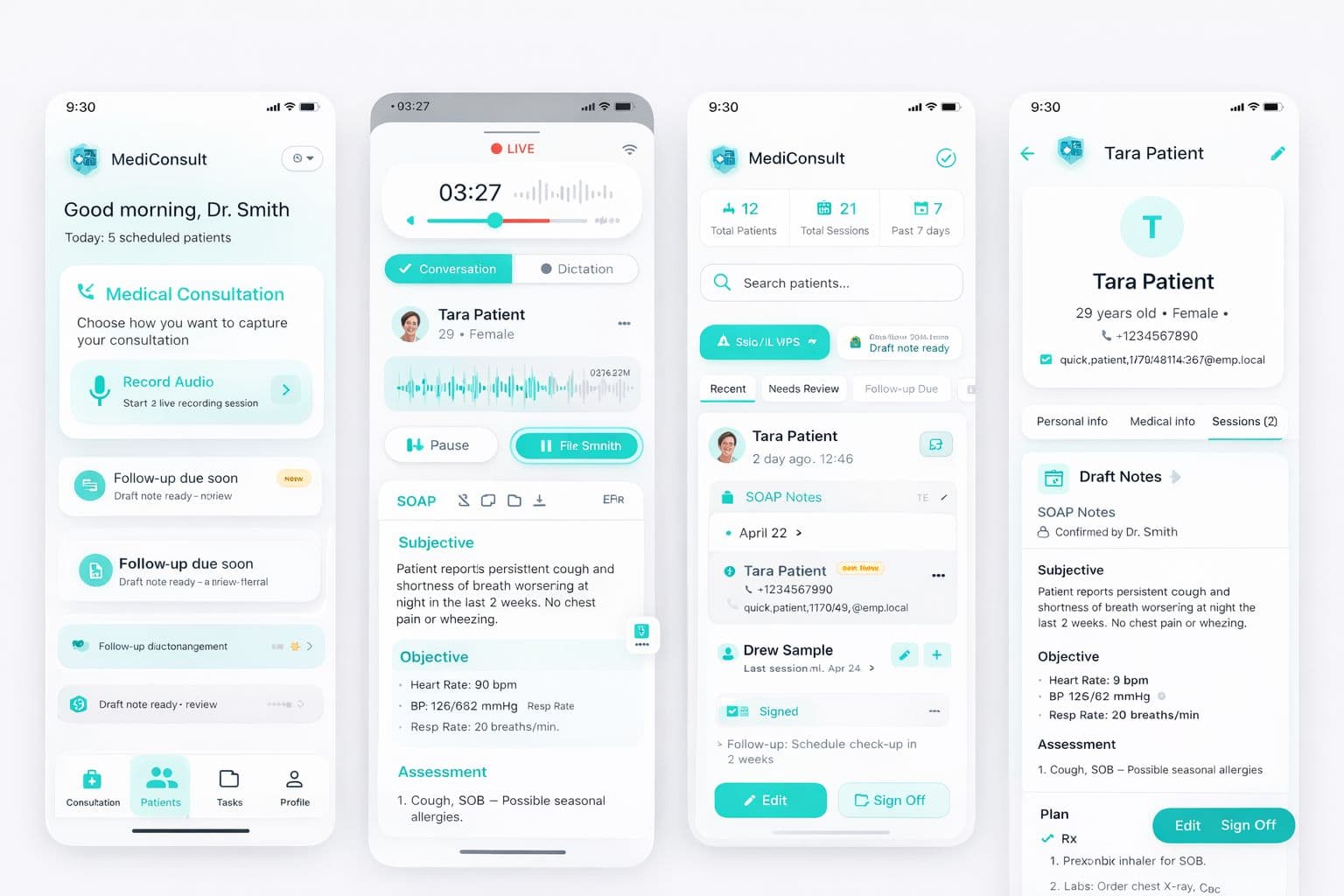
MediConsult
Healthcare operations platform for patients and doctors, combining consultation, scheduling, documents, prescriptions, and communication workflows.
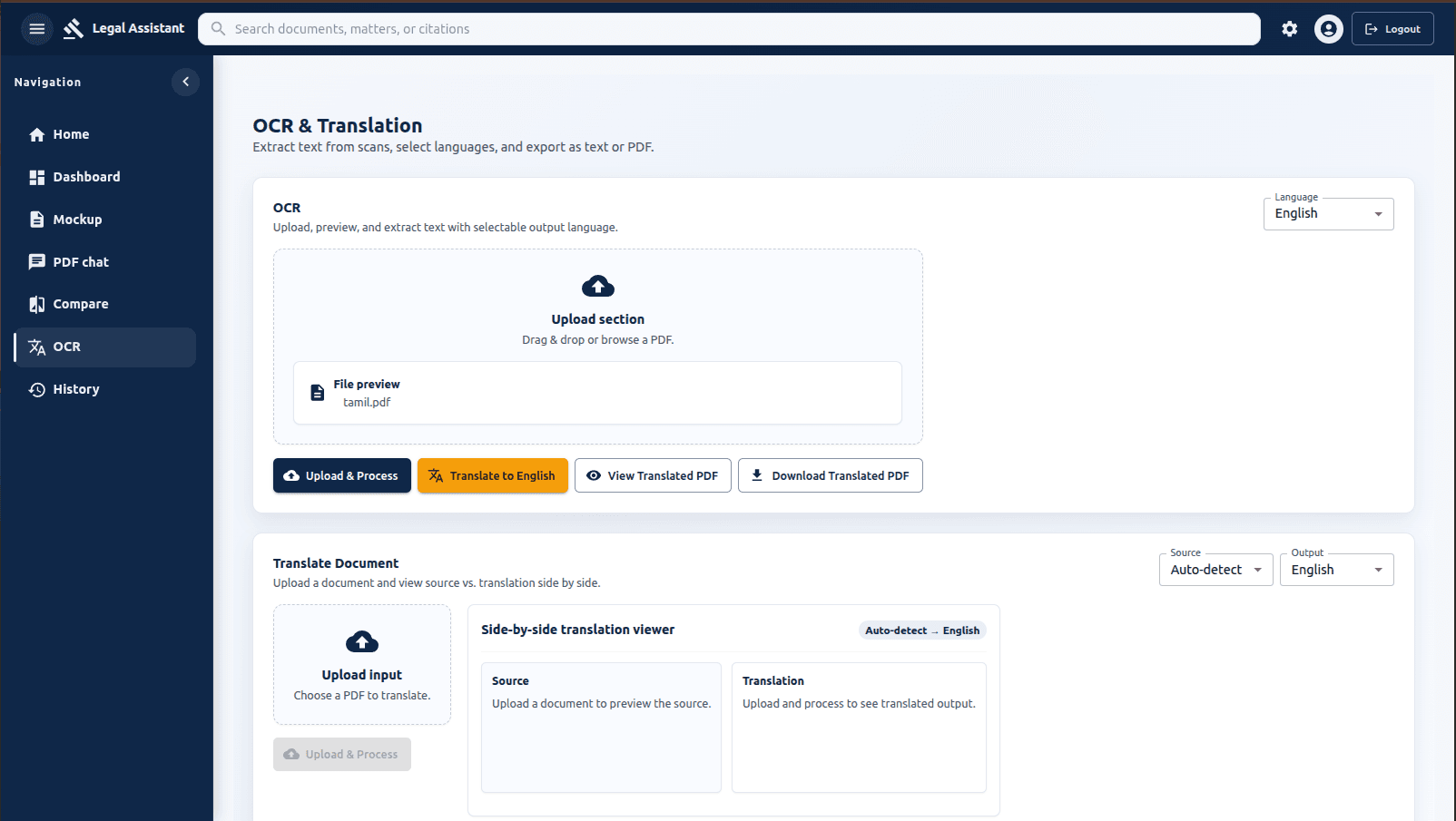
Legal Assistant
Platform for legal professionals with document analysis, legal research, case discovery, OCR, translation, comparison, and AI chat.
Common questions
Do your agents act autonomously, or is there human oversight?
Depends on the workflow. Where agent output affects a real decision (a prescription, a legal document conclusion, a financial record), we build in a human review checkpoint so the AI output stays a draft until someone approves it. Lower-stakes internal routing and extraction can run with less oversight, scoped during the initial call.
What's the difference between an 'agent' and a chatbot?
A chatbot answers questions. An agent is given a task, executes multi-step work toward it (reading, extracting, comparing, routing), and produces a structured result. Our MediConsult and Legal Assistant projects use CrewAI to split that work across multiple specialized agents rather than one general-purpose assistant.
Can an agent workflow connect to our existing systems?
Yes. Agent workflows are built to read from and write to the systems you already use where feasible. The integration surface (how many systems, what access patterns) is one of the main factors in scoping and timeline.
What happens if the agent gets something wrong?
Two layers: first, human review checkpoints on decision-affecting output. Second, fallback flows: if a step fails or the agent is uncertain, the workflow degrades to a manual path rather than producing a silent wrong answer.
How long does an agent workflow take to build?
It depends on how many agent roles are involved and how many systems they touch. A single-workflow validation can fit a 10-day Launch Sprint; a full multi-agent feature inside a product typically fits the 45-day Core MVP timeline.
Talk through your ai agent development scope
Book a 20-minute AI audit call, or explore the surrounding context first.
Book an AI audit